Grease, Grit, and Six Figures: How Santa Maria's Factory Floors Are Quietly Outpaying Silicon Valley Dreams
Forget the ping-pong tables and the cold brew on tap. Some of the most financially rewarding careers being built in California right now are happening inside facilities you'd drive past without a second glance — warehouses and production floors tucked along industrial corridors in Santa Maria, where the pay stubs are thick and the dress code is steel-toed boots.
Advanced manufacturing in the Santa Maria Valley has been quietly leveling up for years. And while the tech press fixates on the next unicorn out of San Francisco, a different kind of wealth-building story is unfolding right here in the 805 — one that doesn't require a computer science degree, a venture capital pitch, or a willingness to sleep under your desk.
What "Advanced Manufacturing" Actually Means Here
When people hear "manufacturing," they picture something from a 1970s documentary — repetitive, loud, and physically punishing. That picture is outdated. Today's manufacturing floors in Santa Maria look more like precision labs than old-school assembly lines.
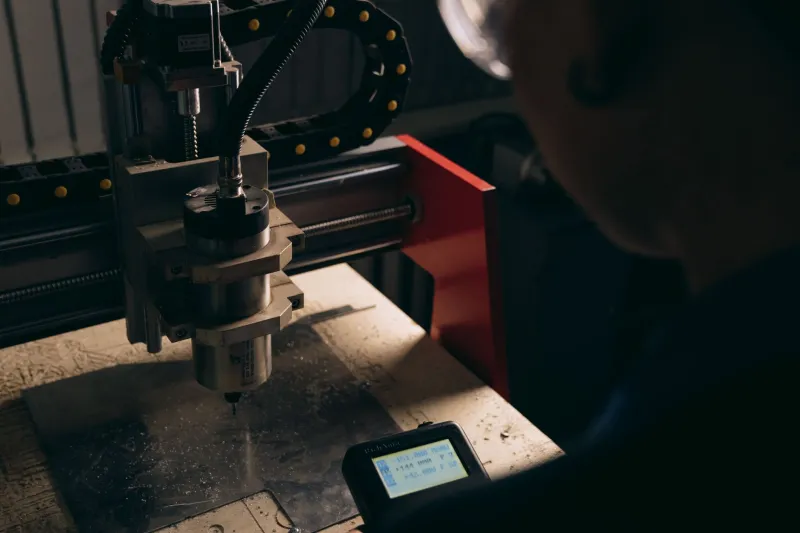
We're talking CNC machining, automated welding systems, aerospace components, food processing technology, and industrial equipment fabrication. Workers here operate sophisticated machinery, read technical blueprints, troubleshoot computerized production systems, and maintain quality standards that would make a surgeon nod approvingly. The skill ceiling is high. So is the paycheck.
Experienced machinists, quality control technicians, and production supervisors in this sector routinely earn between $70,000 and $110,000 annually. Senior roles and specialized operators? They can push past that. In a region where the cost of living is a fraction of what you'd pay in Los Angeles or the Bay Area, that kind of income doesn't just cover the bills — it builds equity, funds retirement accounts, and puts kids through college.
The Training Pipeline Nobody's Talking About
Here's the part that doesn't get nearly enough credit: you don't have to arrive in Santa Maria with these skills already in hand. The training infrastructure is real, it's local, and it's increasingly aligned with what employers actually need.
Allan Hancock College has been quietly expanding its vocational and technical programs to meet the demand from valley manufacturers. Welding, machining, industrial maintenance, electronics technology — these aren't afterthought programs. They're filling seats and placing graduates directly into jobs that pay living wages from day one.
Employers in the sector have also started doing something that should be more common: building their own pipelines. Apprenticeship arrangements, paid on-the-job training programs, and partnerships with local high schools are creating a conveyor belt of skilled workers that bypasses the traditional four-year university model entirely. For a lot of families in Santa Maria, that matters. Not everyone has the time or the resources to spend four years accumulating student debt before they start earning.
The workforce development conversation in Santa Maria often circles back to the same tension — employers saying they can't find enough skilled workers, workers saying nobody told them these jobs existed. Bridging that gap is still a work in progress, but the pieces are coming together faster than most people realize.
Why This Moment Is Different
The manufacturing revival happening in Santa Maria isn't just a local story. It's riding a national wave — reshoring, supply chain diversification, and a growing political and economic consensus that the United States needs to make things again. Federal infrastructure investment, defense spending, and domestic production incentives are all pointing in the same direction.
Santa Maria sits at an interesting intersection. Its geography, infrastructure, and available industrial space make it genuinely attractive for manufacturers who've been burned by supply chain fragility and are looking to plant roots in a stable, accessible location. The cost of operating here is dramatically lower than coastal metro areas, and the labor market — while competitive — hasn't hit the ceiling that places like the Bay Area reached years ago.
For manufacturers already operating in the valley, this is an opportunity to expand. For those considering a move, the math is hard to argue with. And for workers — especially younger workers who've been told their only path to financial stability runs through a university — it's a moment worth paying attention to.
The Generational Wealth Angle
This is the part of the story that doesn't get told nearly enough. Manufacturing jobs in Santa Maria aren't just paychecks — they're platforms.
A 22-year-old who completes a two-year machining program at Hancock, lands a starting role at $55,000, and advances to a senior technician position within five years is looking at a career trajectory that rivals — and in many cases beats — what their peers with four-year degrees are building. Without the debt. Without the relocation to an expensive city. Without the brutal job market competition that plagues entry-level white-collar roles.
Own a home in Santa Maria on that income? Entirely possible. Build a retirement account? Absolutely. Have the stability to raise a family without the constant financial anxiety that defines life for so many young adults in California right now? That's not a fantasy here — it's a realistic outcome.
For families who've been in the valley for generations, this represents something significant: a pathway to financial security that doesn't require leaving the community that raised them. That's not a small thing.
What Needs to Happen Next
The manufacturing sector in Santa Maria has momentum, but momentum isn't the same as inevitability. A few things need to keep moving in the right direction.
First, the perception problem has to be tackled head-on. Somewhere along the way, skilled trades got culturally downgraded — treated as a consolation prize for students who "couldn't" go to a four-year university. That narrative is not only wrong, it's actively harmful. Local schools, counselors, and community leaders need to be as enthusiastic about a career in precision manufacturing as they are about any other high-earning profession. Because the data supports it.
Second, employers need to keep investing in their people. The manufacturers winning in this market aren't just offering competitive wages — they're offering clear advancement paths, ongoing training, and the kind of stability that builds loyalty. In a tight labor market, that's not just good HR practice. It's a competitive advantage.
Third, the chamber and local economic development organizations need to keep telling this story — loudly and often. Attracting new manufacturing businesses to Santa Maria means making the case that the workforce is here, the infrastructure is here, and the community is ready. That case gets stronger every time another local manufacturer posts a record year.
The Quiet Revolution Is Already Underway
You won't see it trending on social media. There's no celebrity investor attached to it. But walk through one of Santa Maria's manufacturing facilities on a Tuesday afternoon and you'll find something increasingly rare in California: skilled workers earning real money, building real careers, in the community where they grew up.
That's not a consolation prize. That's the whole point.
The tech hype will keep cycling through its boom-and-bust rhythms. Meanwhile, the machines in Santa Maria will keep running — and the people running them will keep cashing checks that would surprise a lot of people who've written off the valley as flyover country.
The revolution is quiet. That doesn't mean it isn't real.