Staying Put and Scaling Up: Meet Santa Maria's New Breed of Homegrown Entrepreneurs
There's a story that gets told a lot about ambitious young people from small towns. They grow up, get educated, and leave — pulled toward bigger cities, bigger money, bigger stages. For a long time, that narrative held some truth in Santa Maria. The Valley raised them, and somewhere else got the benefit.
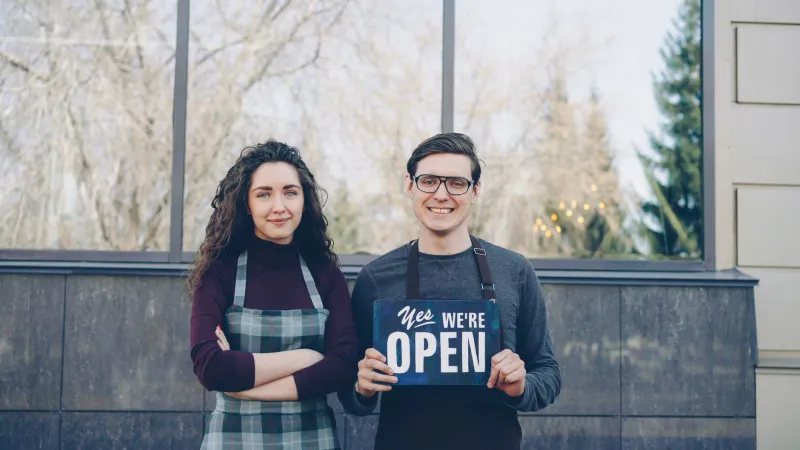
But something has shifted. Quietly, steadily, a new generation of entrepreneurs is planting flags right here — not because they couldn't leave, but because they actively chose to stay. And the businesses they're building are turning heads in ways that matter.
Not Inheriting — Building
These aren't the kids who stepped into a ready-made family operation. Many of them watched their parents build something from scratch — a trucking route, a produce stand, a small restaurant — and absorbed every lesson without necessarily inheriting the business itself. What they inherited was something harder to quantify: a work ethic, a community network, and a clear-eyed understanding of what it actually takes to keep a business alive.
That background shapes everything about how they operate. They're not romanticizing the startup grind. They've seen what a bad quarter does to a family dinner table. They know that growth without stability isn't growth — it's a gamble. And so they build differently.
For many of them, the decision to launch in Santa Maria wasn't a fallback. It was a deliberate strategy.
The Valley as a Competitive Advantage
Ask any of them why they stayed, and the answers follow a recognizable pattern — but they don't feel like talking points. They feel like lived experience.
Operating costs here are a fraction of what you'd face in Los Angeles or the Bay Area. Commercial space that would cost a premium in San Francisco is accessible in Santa Maria at a price that lets a young business owner actually breathe during the early years. That breathing room is everything when you're trying to build something sustainable rather than something flashy.
Then there's the customer relationship. In a market the size of Santa Maria, word travels fast — in both directions. Build a reputation for quality and reliability, and the community rewards you with loyalty that no advertising budget can manufacture. Burn a bridge, and you'll feel it. That accountability, for this generation of entrepreneurs, isn't a drawback. It's a feature. It keeps them honest and it keeps them focused.
The agricultural backbone of the region also creates real opportunity. Santa Maria Valley sits at the intersection of farming, food production, logistics, and hospitality in ways that don't exist in most markets. Entrepreneurs who understand that ecosystem — who grew up in it — can identify gaps and serve needs that an outsider would take years to even recognize.
Redefining What "Making It" Looks Like
Here's where this generation diverges most sharply from the startup mythology that dominated the last two decades. They're not building toward an exit. They're not optimizing for a valuation. They're not lying awake at night fantasizing about acquisition offers.
What they're building toward is something harder to put on a pitch deck: a business that can sustain a family, employ neighbors, anchor a neighborhood, and still be standing in twenty years.
That sounds modest until you actually sit with it. Sustainable, community-rooted businesses are genuinely rare. Most startups fail. Most venture-backed companies never return a profit. The "go big or go home" model produces a lot of people who went home with nothing. The entrepreneurs staying in Santa Maria are playing a different game — and by the metrics that actually matter to most people's lives, they're winning.
They're hiring locally. They're buying from other local vendors. They're showing up at chamber events and city council meetings and school fundraisers. The economic impact of that kind of embedded business ownership compounds over time in ways that a company with no local roots simply cannot replicate.
The Network Effect of Staying
One thing that doesn't get talked about enough is how much this generation benefits from — and actively contributes to — a growing local entrepreneurial network. Santa Maria isn't Silicon Valley, but it has its own version of the knowledge-sharing culture that makes startup ecosystems work.
Business owners here tend to know each other. They refer customers to one another. They share vendor contacts, warn each other about bad actors, and occasionally partner on projects that neither could pull off alone. That informal infrastructure is more valuable than it looks from the outside, and it's something that took years to build.
The second-generation entrepreneurs plugging into that network today are doing so with a significant head start. Their parents' relationships open doors. Their community fluency — knowing the culture, the history, the unwritten rules of doing business in the Valley — compresses the learning curve in ways that no amount of capital can replace.
Challenges That Don't Get Glossed Over
None of this is to suggest it's easy. It isn't.
Access to capital remains a genuine obstacle for young business owners who don't have collateral or an established credit history. The local talent pool, while improving, still requires creative recruiting strategies. And there's a psychological weight that comes with building in a community where everyone knows you — the stakes feel personal in ways they wouldn't in an anonymous big-city market.
Bureaucratic friction is real too. Permitting timelines, zoning regulations, and the general complexity of launching a business in California can slow momentum at exactly the wrong moment. These aren't dealbreakers for determined entrepreneurs, but they're friction points that the broader business community — including the Chamber — should keep working to reduce.
What This Means for Santa Maria
The rise of this entrepreneurial cohort is genuinely good news for the Valley's economic future. Local ownership means local decision-making. It means profits that recirculate within the community rather than flowing to distant shareholders. It means employers who have a personal stake in the health of the local workforce and school system and civic life.
It also means a more resilient local economy — one that isn't entirely dependent on a handful of large employers or agricultural cycles. Diversification built from the ground up, by people who know the ground, is the most durable kind.
The story of Santa Maria's next chapter isn't going to be written by outside investors or transplant founders looking for cheap square footage. It's going to be written by the people who grew up here, learned here, and made a conscious choice to build here.
That's not a consolation prize. That's a foundation.